


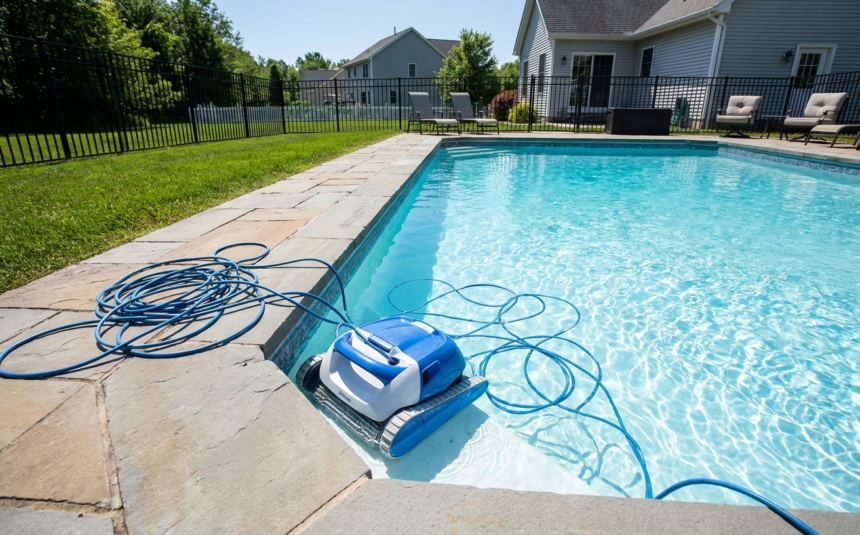
You drop the cleaner in, go inside, and come back an hour later expecting a spotless floor. Instead, the robot is wedged in the deep end corner, spinning its wheels against the wall. The cable is wrapped around the ladder. And the only part of the pool that actually got cleaned is the three-foot radius around where it started.
Getting stuck is the number one complaint from robotic pool cleaner owners. It is also one of the most fixable problems, once you understand why it happens. The cause is almost never the cleaner itself. It is the environment it is operating in.
A few adjustments to your pool setup and your deployment routine can eliminate most sticking problems entirely.
Cable Tangles: The Silent Saboteur
The power cable is the most overlooked factor in cleaner performance. Most owners uncoil it, drop the cleaner in, and let the cable float freely. But a floating cable gets caught on ladders, return fittings, skimmer mouths, and pool lights. Once the cable snags, the cleaner cannot move forward, and the navigation system has no way to detect the restriction.
The solution is to manage the cable actively. Before starting the cleaner, spread the cable across the pool surface in a loose figure-eight pattern. This gives the cleaner enough slack to reach every part of the pool while keeping the excess cable away from obstacles.
Some owners use a cable float system that keeps the cable on the surface and prevents it from sinking into the cleaning path. These are inexpensive and effective, especially for pools with multiple obstructions near the waterline.
Corner Traps and Geometry Problems
Sharp ninety-degree corners are the natural enemy of robotic cleaners. When the cleaner drives into a corner, it presses against both walls simultaneously. Depending on the navigation logic, it may try to turn but lack the space to execute the turn. The result is a stuck cleaner that sits in the corner until you manually free it.
More EV News

Freeform pools with rounded corners rarely have this problem. Rectangular pools with sharp corners suffer from it regularly. If your pool has sharp corners and your cleaner keeps getting stuck there, there are a few strategies that help.
- Place a small buoy or foam float in each corner to reduce the effective angle
- Direct the cleaner away from corners during the first few minutes by manually positioning it in the center
- Choose a cleaner model with advanced navigation that detects obstacles and reverses direction
The buoy trick sounds odd, but it works. A tennis ball or a small pool float wedged into each corner gives the cleaner something to bounce off of instead of getting wedged between the walls.
Main Drain Entrapment
Main drains sit on the pool floor with a grate that can trap the cleaner’s wheels or intake port. This is especially common with suction-side cleaners, but it happens with robotic models too, particularly those with low ground clearance and strong suction.
If your cleaner consistently gets stuck on the main drain, check the drain cover first. Anti-entrapment drain covers with a raised dome shape are less likely to trap the cleaner than flat grates. Replacing the cover is a simple fix that also improves safety.
Some cleaners allow you to adjust the front bumper height or suction power. Lowering the suction slightly can reduce the pulling force that draws the cleaner onto the drain grate without significantly affecting cleaning performance.
Ladder and Step Obstructions
Ladders, handrails, and step corners create narrow channels that the cable can thread through but the cleaner body cannot. Once the cable passes under a ladder rail, the cleaner is tethered to that spot until the cable is freed.
If your pool has a removable ladder, take it out before running the cleaner. If the ladder is permanent, wrap a pool noodle around the lower rail to create a smooth surface that the cable slides over instead of catching on.
Steps with deep corners are another common trap. The cleaner drives into the step area, cannot navigate the tight space, and gets stuck. Running the cleaner on a floor-only cycle avoids the steps entirely, while a wall-and-floor cycle may need manual intervention in the step area.
When the Problem Is the Cleaner Itself
Sometimes the sticking is not environmental. It is mechanical. Worn drive tracks lose traction and cannot climb walls or pull the cleaner out of corners. A failing motor creates uneven drive power that causes the cleaner to pull to one side. Clogged impellers reduce suction and prevent the cleaner from maintaining grip on vertical surfaces.
If you have eliminated all the environmental factors and the cleaner still gets stuck regularly, inspect the drive system. For a complete diagnostic walkthrough that covers every possible cause of sticking, this comprehensive guide identifies the specific issue based on your cleaner’s behavior and provides step-by-step fixes.
Most sticking problems caused by the cleaner itself are repairable with inexpensive replacement parts. Replace worn tracks, clean the impeller, and test each drive motor independently.
Building a Stuck-Free Routine
Most sticking problems disappear when you follow a consistent deployment routine. Spread the cable. Remove the ladder. Place corner floats if needed. Drop the cleaner in the center of the pool rather than against a wall. These five steps take less than two minutes and prevent the vast majority of sticking incidents.
Watch the first five minutes of the cleaning cycle occasionally. This is when most sticking problems occur, because the cable has not yet settled into a natural path and the cleaner is navigating the most complex area near the steps. If it moves freely through the first five minutes, it will usually complete the cycle without issues.
A cleaner that runs an uninterrupted two-hour cycle cleans the entire pool. A cleaner that spends half the cycle stuck in a corner cleans half the pool. The difference between frustration and satisfaction often comes down to how you deploy the machine, not which machine you own.