


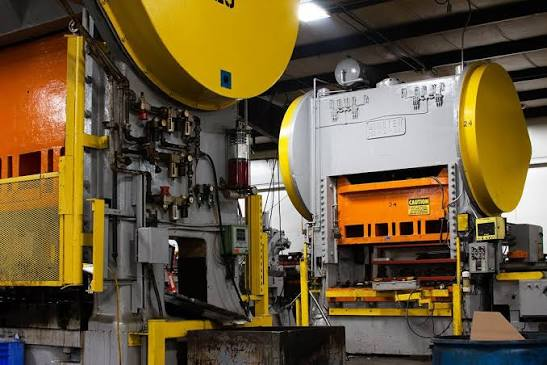
Steel stamping services play an important role in modern manufacturing. They allow companies to turn flat steel sheets, strips, and coils into functional components with accurate shapes and repeatable dimensions. Using presses and custom tooling, manufacturers can perform operations such as cutting, bending, drawing, punching, and forming.
Many industries rely on steel stamping because it can support both small precision parts and large production runs. When the process is properly planned, it can reduce manufacturing time, control material waste, and deliver consistent components. This guide explores the major aspects of steel stamping services and explains what businesses should consider when choosing a supplier.
What Do Steel Stamping Services Include?
Steel stamping services cover much more than simply pressing metal into a die. A professional stamping provider may manage several stages of a manufacturing project.
These services can include product evaluation, tooling design, prototype development, material sourcing, stamping, inspection, finishing, assembly, and packaging.
The exact service package depends on the manufacturer and the customer’s requirements. Some companies may only need stamped components, while others prefer a complete manufacturing solution.
Working with a provider that can manage multiple stages can simplify production and reduce the need to coordinate with several suppliers.
How Steel Stamping Converts Sheets Into Components
The process starts with a steel sheet, strip, or coil. The material is positioned in a stamping press and guided into a specially engineered die.
The press moves a punch against the steel. The force causes the material to follow the shape of the tooling. Depending on the operation, the steel may be separated, bent, stretched, or formed.
Some components require only one stamping operation. Others pass through multiple stages before reaching their final configuration.
After the primary stamping process, parts may receive additional treatment to remove sharp edges, improve appearance, or prepare them for assembly.
Different Steel Materials for Stamping
Steel stamping services can work with different grades depending on the required application. Material selection should be based on mechanical properties and manufacturing requirements.
Low-carbon steel is often suitable for parts requiring significant forming. It provides useful ductility and can be shaped into various configurations.
Stainless steel is another common choice when corrosion resistance or a particular appearance is required.
Galvanized steel provides a protective coating that can help resist corrosion. High-strength steel can be selected for components that need greater structural performance.
The material thickness also affects the stamping process. Thicker steel may require additional press capacity and stronger tooling.
Types of Stamping Equipment
Different production requirements call for different types of stamping equipment. Mechanical presses are commonly used for rapid and repetitive operations.
Hydraulic presses can provide controlled force and may be suitable for certain forming and drawing applications.
Manufacturers may also use automated coil feeders, straighteners, sensors, and robotic handling systems.
Computer-controlled equipment can improve repeatability by maintaining consistent production parameters. Automation is especially useful for large orders where thousands of identical components must be manufactured.
The best equipment depends on the part dimensions, material properties, production volume, and required accuracy.
Advantages of Outsourcing Steel Stamping
Outsourcing steel stamping services can provide businesses with access to specialized machinery and technical knowledge without requiring them to purchase their own stamping equipment.
A professional manufacturer already has experience with dies, presses, material behavior, and production planning.
Other potential benefits include:
- Reduced equipment investment
- Access to experienced engineers
- Faster production setup
- Consistent component quality
- Scalable manufacturing capacity
- Professional quality inspection
- Specialized tooling resources
- Better production planning
Outsourcing can be particularly useful for companies that require stamped components but do not have enough production volume to justify operating an internal stamping facility.
Custom Steel Stamping for Specialized Parts
Not every component can be produced using standard tooling. Custom steel stamping services allow manufacturers to create parts according to specific customer drawings and technical requirements.
Custom projects may involve unusual dimensions, complex bends, special holes, multiple forming stages, or tight tolerances.
Engineers can evaluate the design before production begins. They may recommend changes that improve material flow or make the component easier to manufacture.
This early design review can help reduce tooling problems and improve the final production process.
Low-Volume and High-Volume Production
Production quantity has a major influence on the appropriate stamping strategy.
For smaller production runs, manufacturers may choose simpler tooling to reduce initial costs. Prototypes can also be produced to verify dimensions and functionality before full production begins.
High-volume orders can benefit from progressive or multi-stage stamping. These processes allow multiple operations to occur efficiently as material moves through the production line.
Although advanced tooling may require greater initial investment, high production volumes can reduce the average tooling cost per component.
Precision and Tolerance Management
Some stamped parts need highly controlled dimensions because they must fit into larger assemblies. Precision steel stamping services focus on maintaining these requirements throughout production.
Tolerance management begins during component design and tooling development. Engineers consider material thickness, press accuracy, die clearance, and forming behavior.
Steel can experience springback after being formed. This means the material may slightly move toward its original shape after pressure is removed. Tooling can be designed to account for this effect.
Regular inspection helps confirm that production remains within the required tolerances.
Secondary Operations After Stamping
Stamping does not always produce a completely finished component. Many parts require additional operations after they leave the press.
Deburring can remove sharp edges created during cutting. Welding can join stamped pieces together to create larger assemblies.
Other secondary operations may include tapping, drilling, heat treatment, machining, cleaning, painting, powder coating, or plating.
Using a supplier that offers multiple secondary services can simplify the manufacturing process. Instead of transporting parts between several companies, customers can manage more of the project through one provider.
Quality Assurance in Steel Stamping
Reliable quality control is essential for steel stamping services. Manufacturers need to confirm that every production batch meets the required specifications.
Quality checks can include dimensional measurements, material verification, surface inspections, and functional testing.
Production teams should also monitor the condition of stamping dies. Worn tooling can gradually affect dimensions and surface quality.
Automated inspection systems can improve consistency when large quantities are being produced. Statistical process monitoring can also help identify production changes before they result in major defects.
How Tooling Influences Production
Tooling is a major factor in the success of a stamping project. The die controls many of the features that appear on the finished component.
Tooling must be designed according to the steel grade, thickness, geometry, production volume, and press capabilities.
A durable die can support long production runs with fewer interruptions. Regular maintenance can further extend its working life.
Although high-quality tooling may require greater initial investment, it can provide better consistency and lower maintenance costs over time.
Selecting a Reliable Steel Stamping Company
Choosing a suitable supplier requires more than comparing prices. Businesses should evaluate technical capabilities, equipment, quality systems, and production experience.
A supplier should have experience working with the type of steel and component required for the project. It should also have sufficient press capacity and tooling resources.
Customers should ask about production timelines, inspection procedures, finishing options, minimum order quantities, and packaging.
Clear communication is equally important. A supplier that communicates effectively can identify potential problems early and help keep the project on schedule.
Ways to Improve Stamping Project Efficiency
Several decisions can improve the efficiency of a steel stamping project. First, provide accurate drawings and specifications before tooling begins.
Second, select a material that provides the necessary performance without unnecessary cost. Over-specifying the steel can increase expenses.
Third, review the component design for manufacturability. Simple changes to bends, holes, radii, or material thickness can sometimes make stamping easier.
Finally, consider production volume when choosing tooling. The most economical solution for a small batch may not be suitable for millions of components.
Conclusion
Steel stamping services provide an effective way to manufacture reliable metal components at different production volumes. Modern stamping facilities can offer everything from custom tooling and precision forming to finishing, inspection, and assembly.
The right material, equipment, tooling, and quality procedures are essential for achieving dependable results. Businesses should therefore evaluate a stamping provider’s technical expertise and production capabilities before starting a project.
With careful planning and professional manufacturing support, steel stamping can deliver accurate components while helping companies control production time, material usage, and overall manufacturing costs.